Sore muscles: how to recover faster
Light movement, sleep, enough protein: what really speeds up recovery from sore muscles (DOMS), what makes no difference, and when to start worrying.
The short answer: move lightly, sleep, and ride out the peak. Muscle soreness — DOMS, short for delayed onset muscle soreness — is micro-damage in the muscle being repaired, not lactic acid (a stubborn myth: lactate returns to its resting level shortly after exercise, well before the pain shows up). It sets in within 24 hours of an unusual workout, peaks between 48 and 72 hours according to a 2018 review of its mechanisms, then goes away on its own. Nothing really “cures” it, but several things speed up your return to normal — and two or three classic mistakes slow it down.
What actually helps sore muscles?
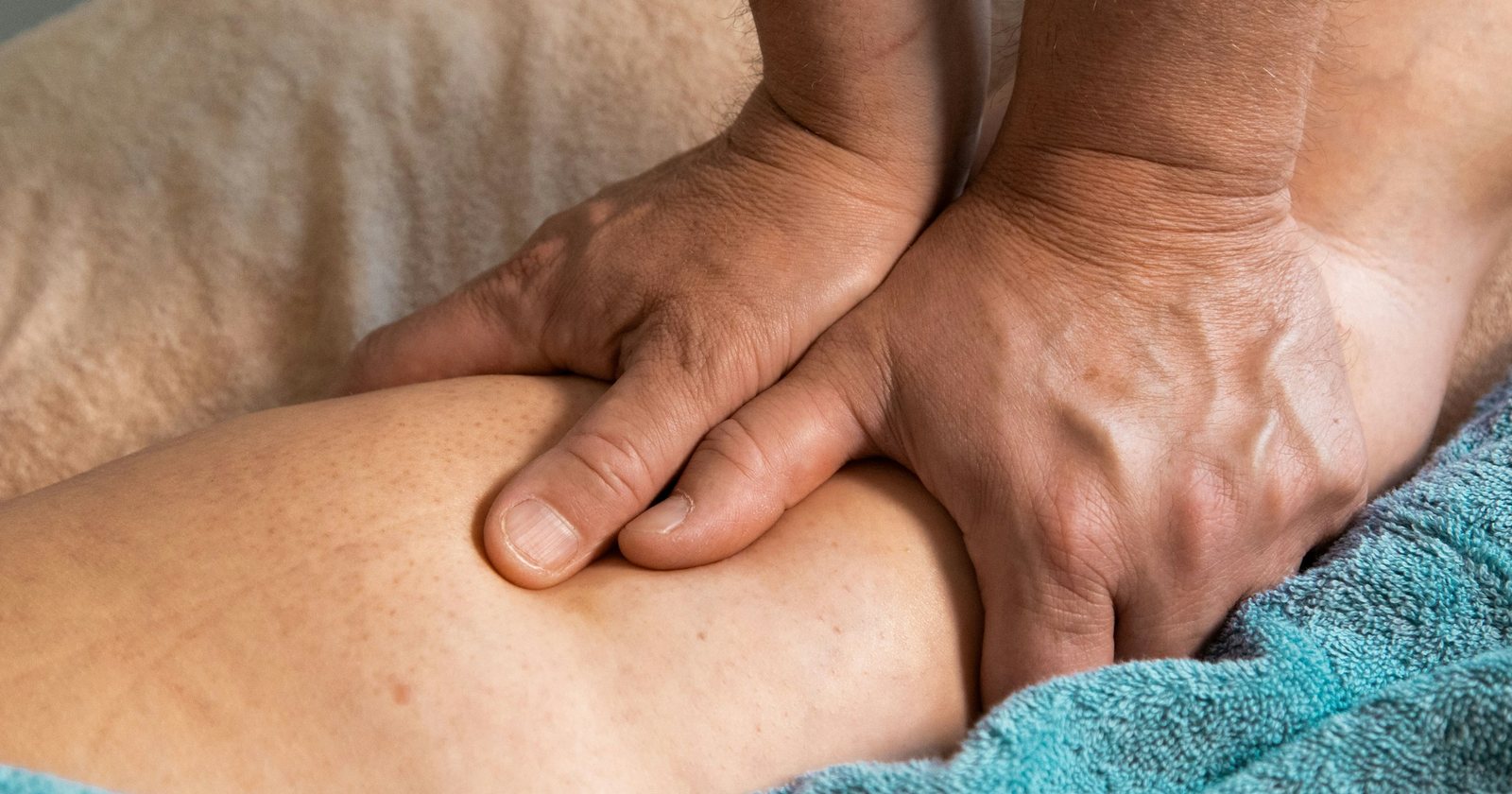
- Massage. It comes out on top: a 2018 meta-analysis (99 studies) ranks it as the most effective technique against soreness and perceived fatigue.
- Active recovery. Walking, easy cycling, easy swimming: 20 to 30 minutes of light movement increases blood flow to the muscles and reduces the feeling of stiffness. A real but more modest effect in the same meta-analysis — and the most counterintuitive one when you feel like never moving again.
- Sleep. Repair happens overnight: growth hormone during deep sleep, protein synthesis. Sleep short after a big workout and the soreness lasts longer — aim for the top of your range in the days that follow.
- Protein. Muscle repairs itself with raw materials: 1.6 to 2.2 g per kilogram of body weight per day (about 0.7 to 1 g per pound), spread across the day, including a serving in the evening.
- Heat (hot water bottle, hot shower, bath) relaxes you and eases stiffness: according to a 2021 meta-analysis (32 trials, 1,098 participants), both heat and cold applied within an hour after exercise reduce pain, and the effect of heat holds beyond 24 hours.
What barely helps: stretching, ice baths, ibuprofen
Stretching before or after a workout doesn't prevent soreness — one of the most replicated findings: according to a Cochrane review (12 trials), it reduces next-day pain by one point or less on a 100-point scale. Ice baths bring a little relief but can blunt your adaptations when you take them after every session: in a 12-week trial, people who took a 10-minute cold bath after each workout gained less strength and muscle than those who did active recovery instead. Save them for competition periods. And routine anti-inflammatories are a bad idea: inflammation is part of the rebuilding process, and in an 8-week trial, a high daily dose of ibuprofen cut the gain in muscle volume in half compared with a low dose of aspirin. If the pain is pushing you toward medication, talk to your doctor or pharmacist.
Can you work out with sore muscles?
Yes, with judgment. Mild soreness: train as usual; the warm-up will ease it. Marked soreness: work a different muscle group or do a light session — muscle under repair needs its 48 to 72 hours, which is exactly why a well-built week alternates muscle groups (here's the right frequency). Pain that forces you to change how you move, on the other hand, means rest.
Two signals should make you back off more seriously: soreness that regularly lasts more than 4 to 5 days — a sign you're piling up more than you recover from (the other warning signs of overtraining are here) — and pain that's one-sided, localized and sharp, which looks more like an injury than soreness.
Key takeaways
- Soreness is repair in progress: it peaks at 48 to 72 hours. Light movement, massage, sleep, protein.
- Stretching: useless against the pain. Ice after every session and routine anti-inflammatories: counterproductive for your progress.
- Training lightly while sore is healthy; repeated 5-day soreness is a sign of overtraining.
Frequently asked questions
How do you get rid of sore muscles fast?
Massage (the most effective technique according to a 2018 meta-analysis), active recovery (20 to 30 min of walking or easy cycling), sleep at the top of your range, 1.6 to 2.2 g of protein per kilogram per day, and heat for stiffness. The rest is time: soreness peaks between 48 and 72 hours and goes away on its own.
Can you exercise with sore muscles?
Yes: as usual if the soreness is mild, and on a different muscle group or with a light session if it's marked. Only pain that changes how you move calls for rest.
Is muscle soreness caused by lactic acid?
No — that's a myth. Lactate returns to its resting level shortly after exercise, well before the pain appears. Soreness is micro-damage in the muscle being repaired; it sets in within 24 hours and peaks between 48 and 72 hours.
Sources
- Hotfiel T, Freiwald J, Hoppe MW, et al. Advances in Delayed-Onset Muscle Soreness (DOMS): Part I: Pathogenesis and Diagnostics. Sportverletz Sportschaden. 2018. doi:10.1055/a-0753-1884
- Dupuy O, Douzi W, Theurot D, et al. An Evidence-Based Approach for Choosing Post-exercise Recovery Techniques to Reduce Markers of Muscle Damage, Soreness, Fatigue, and Inflammation: A Systematic Review With Meta-Analysis. Front Physiol. 2018. doi:10.3389/fphys.2018.00403
- Wang Y, Li S, Zhang Y, et al. Heat and cold therapy reduce pain in patients with delayed onset muscle soreness: A systematic review and meta-analysis of 32 randomized controlled trials. Phys Ther Sport. 2021. doi:10.1016/j.ptsp.2021.01.004
- Herbert RD, de Noronha M, Kamper SJ. Stretching to prevent or reduce muscle soreness after exercise. Cochrane Database Syst Rev. 2011. doi:10.1002/14651858.CD004577.pub3
- Roberts LA, Raastad T, Markworth JF, et al. Post-exercise cold water immersion attenuates acute anabolic signalling and long-term adaptations in muscle to strength training. J Physiol. 2015. doi:10.1113/JP270570
- Lilja M, Mandić M, Apró W, et al. High doses of anti-inflammatory drugs compromise muscle strength and hypertrophic adaptations to resistance training in young adults. Acta Physiol (Oxf). 2018. doi:10.1111/apha.12948
What this article explains,
the app measures for you.
Ecleptic brings your sleep, nutrition and training together in one score, every morning. The iOS beta is open to a small circle.
Request access