Alcohol and sleep: what really happens during the night
Alcohol can help you fall asleep, but it fragments the second half of the night: less REM sleep, weaker heart recovery. Here's what happens, drink by drink.
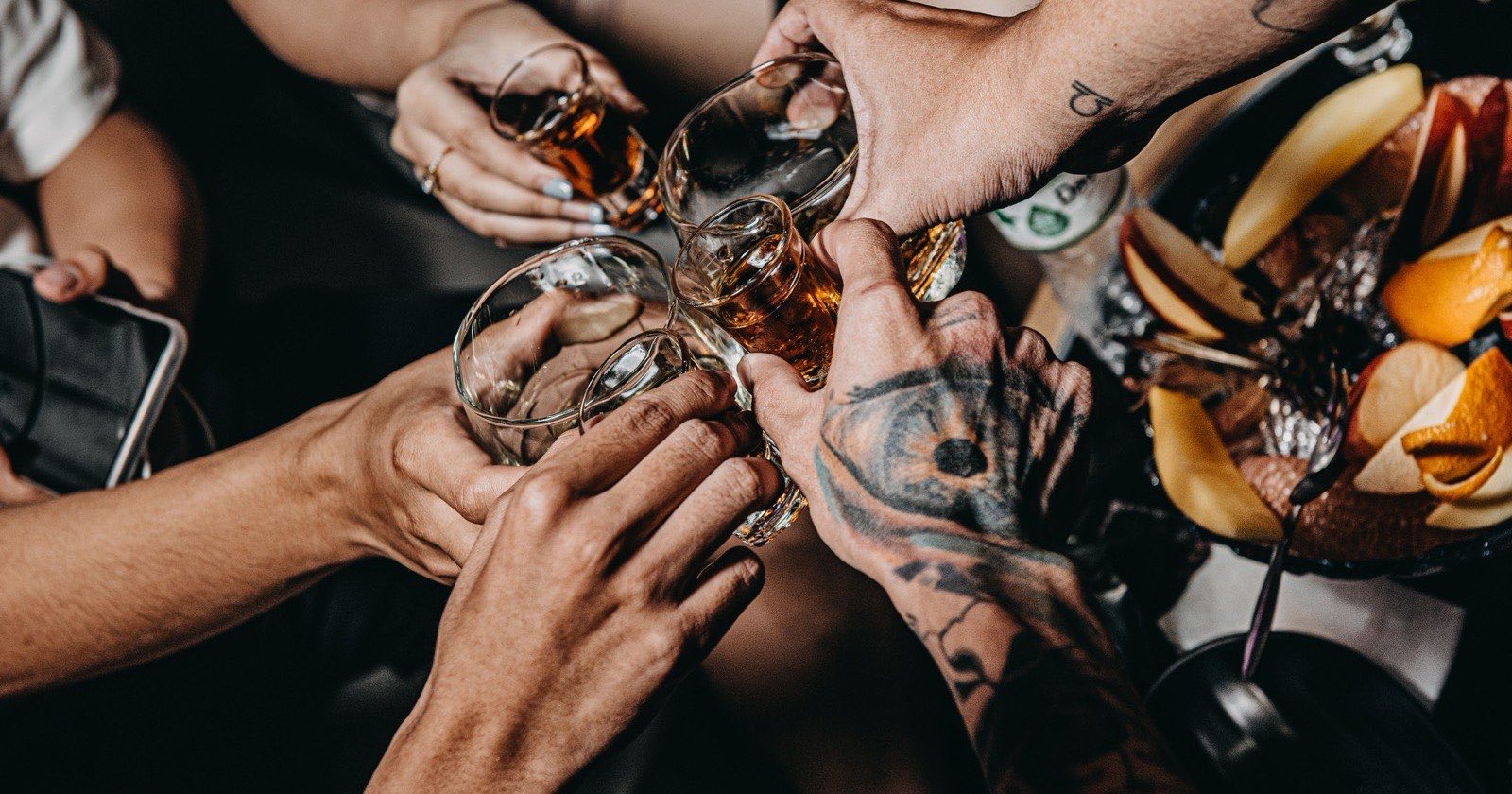
Alcohol is one of the most widely used sleep aids — and one of the worst. The paradox is well known: alcohol is a sedative and can help you fall asleep, and yet the night that follows is objectively less restorative. It's not just a morning-after impression: it's one of the most visible effects there is in sleep data.
How does alcohol affect sleep? A bad bargain, hour by hour
The night plays out in two acts, as described in a 2013 review that pulled together the studies on the subject:
- First half of the night: you fall asleep faster, and deep sleep often even increases. On the surface, everything looks fine.
- Second half: your body has metabolized the alcohol, and the rebound kicks in — nervous system on alert, light and fragmented sleep, repeated awakenings, thirst. REM sleep, concentrated at the end of the night, takes the biggest hit: it's the stage that handles memory and emotional regulation. The result when you wake up: the hour count looks fine, your head says otherwise.
The most recent meta-analysis (2025, 27 studies) pins down the dose: REM sleep is delayed and shortened starting at a low dose, about two standard drinks, and the effect gets worse with each additional drink. Falling asleep faster, on the other hand, only shows up clearly at a high dose, around five drinks.
What alcohol does to your heart rate and HRV overnight
In physiological data, evening alcohol leaves an unmistakable signature, proportional to the dose: a higher nighttime heart rate, crushed HRV, and a readiness score that plunges by morning. In the lab, a 2021 study of 26 adults confirmed it even at moderate doses. In the real world, a Finnish study compared nights with and without alcohol in 4,098 employees:
| Alcohol during the evening | Recovery index (HRV) |
|---|---|
| Low: up to 0.25 g/kg (1 to 2 drinks) | −9.3 points |
| Moderate: 0.25 to 0.75 g/kg (2 to 5 drinks) | −24.0 points |
| High: more than 0.75 g/kg (more than 5 drinks) | −39.2 points |
How to limit alcohol's effect on sleep without becoming a monk
The dose is everything, and timing matters almost as much:
- Timing matters: your liver clears alcohol at a fixed rate — blood alcohol only falls by 0.10 to 0.20 g/L per hour (about 0.01% to 0.02% BAC), according to a benchmark review (2010). Allow at least one hour per standard drink, often more. Two drinks finished at 7 p.m. are largely metabolized by bedtime; the same two at 11 p.m. take up a good part of your night.
- The simple rule: earlier, less, with water and food. One early drink with dinner weighs little, but not nothing; three late drinks, never.
- Pick your nights: avoid late drinking the night before a big workout or an important day — that's precisely when a good night is worth the most.
- Don't “pay it back” by sleeping in the next day: you'd add social jet lag to the bill. Get up at your usual time, and take a short nap if you need one.
Key takeaways
- Alcohol can speed up falling asleep, but it breaks up the second half of the night — especially REM sleep, which takes a hit from two drinks.
- Higher heart rate, crushed HRV: a night of drinking shows up in the data, dose by dose.
- The two levers: how much, and above all when. Early and light changes almost everything.
Frequently asked questions
Does alcohol help you sleep?
It can help you fall asleep (a sedative effect, clear mainly at high doses), but it fragments the second half of the night and cuts into REM sleep from about two drinks, according to a 2025 meta-analysis. The hour count looks fine, but the night is objectively less restorative.
How long before bed should you stop drinking alcohol?
Your liver clears alcohol slowly, at a fixed rate: allow at least one hour per standard drink, often more. Two drinks finished at 7 p.m. are largely metabolized by bedtime; the same two at 11 p.m. take up a good part of your night. Earlier, less, with water and food.
Why does my watch show a bad night after drinking?
Because the signature is unmistakable in the data: a higher nighttime heart rate and lower HRV, in proportion to the dose. In 4,098 Finnish employees, the HRV-based recovery index dropped 9 points after low intake and 39 points after high intake.
Sources
- Gardiner C, Weakley J, Burke LM, et al. The effect of alcohol on subsequent sleep in healthy adults: A systematic review and meta-analysis. Sleep Med Rev. 2025. doi:10.1016/j.smrv.2024.102030
- Ebrahim IO, Shapiro CM, Williams AJ, Fenwick PB. Alcohol and sleep I: effects on normal sleep. Alcohol Clin Exp Res. 2013. doi:10.1111/acer.12006
- Pietilä J, Helander E, Korhonen I, et al. Acute Effect of Alcohol Intake on Cardiovascular Autonomic Regulation During the First Hours of Sleep in a Large Real-World Sample of Finnish Employees: Observational Study. JMIR Ment Health. 2018. doi:10.2196/mental.9519
- de Zambotti M, Forouzanfar M, Javitz H, et al. Impact of evening alcohol consumption on nocturnal autonomic and cardiovascular function in adult men and women: a dose-response laboratory investigation. Sleep. 2021. doi:10.1093/sleep/zsaa135
- Jones AW. Evidence-based survey of the elimination rates of ethanol from blood with applications in forensic casework. Forensic Sci Int. 2010. doi:10.1016/j.forsciint.2010.02.021
What this article explains,
the app measures for you.
Ecleptic brings your sleep, nutrition and training together in one score, every morning. The iOS beta is open to a small circle.
Request access