Resting heart rate: what is a normal resting heart rate?
A normal resting heart rate is 60 to 100 bpm, and 40 to 60 bpm in endurance athletes. How to measure it when you wake up, and how to read it as a trend.
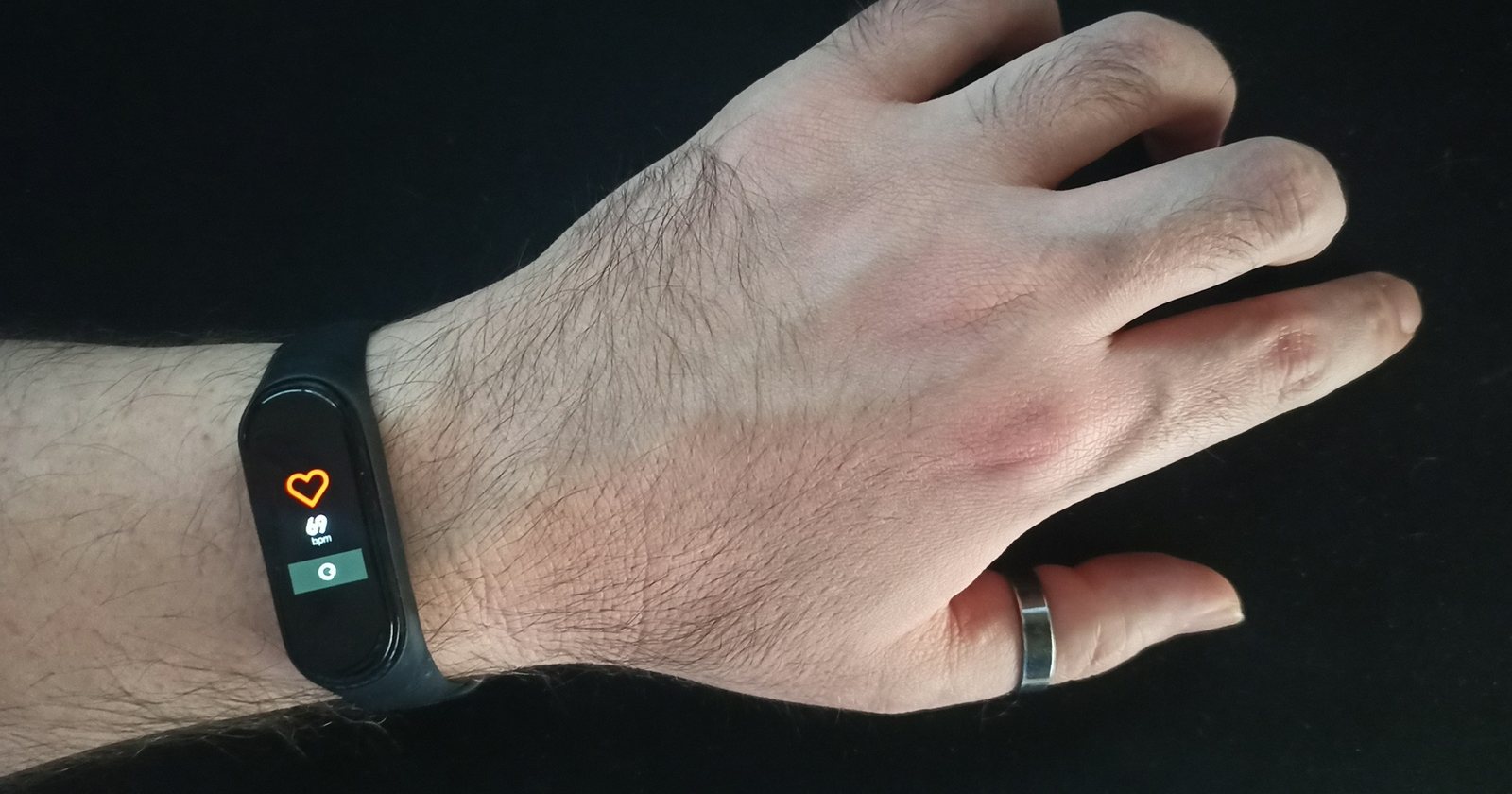
The short answer: for adults, a normal resting heart rate falls between 60 and 100 beats per minute. But if you do endurance training, you're probably lower — often 40 to 60 bpm — and that's perfectly healthy: your heart has become more efficient, it pumps more blood with every beat, so it needs fewer beats to do the same work.
A low resting heart rate is, on average, a sign of good cardiovascular fitness: a 2016 meta-analysis (46 studies, more than 1.2 million people) links every additional 10 bpm at rest to a 9% higher risk of death from all causes. But two very fit people can be fifteen beats apart simply because of genetics. A 2020 study of 92,457 adults wearing a fitness tracker shows it well: 65 bpm on average, but anywhere from 40 to 109 bpm depending on the person, while within the same person the number stays remarkably stable. So the absolute number matters less than you think: what really tells you something is your own trend, day after day.
What's normal — and why resting heart rate varies so much
- Non-athletic adult: 60 to 100 bpm, the standard range used by the U.S. National Library of Medicine.
- Trained endurance athlete: 40 to 60 bpm according to the same source, sometimes lower in seasoned runners and cyclists. A strong heart that beats slowly at rest is the intended result of training, not an abnormality.
- Genetics weighs heavily: at the same fitness level, some people naturally sit at 50, others at 68. Don't use the person next to you as your benchmark.
Other factors move the number from day to day: caffeine, heat, stress, dehydration and a short night push it up; calm and good recovery bring it down. That's why you should always measure under the same conditions.
And don't confuse resting heart rate with maximum heart rate: the first is measured at complete rest and drops with training; the second, reached at maximal effort, depends mostly on age and barely responds to training at all — a 2001 meta-analysis found it independent of habitual activity level. Two different numbers, two different stories — it's your resting heart rate that speaks to your recovery.
How to measure your resting heart rate correctly
The only measurement that's really worth anything is the morning one, taken cold:
- When you wake up, before you even get out of bed — just standing up already makes the number climb.
- Lying down and still, after a few seconds of calm.
- Every day if possible, to build your baseline. A watch or wrist sensor measures this very well overnight and gives you the most stable value, the one from your sleep.
A single reading says almost nothing. It's repetition that turns a number into information.
Read your resting heart rate as a trend, not a snapshot
That's the real use. Once you know your normal — say 52 bpm — what matters is the deviation. A resting heart rate that climbs by several beats for several mornings in a row is a serious signal that something is draining your recovery:
- Accumulated fatigue or the beginnings of overreaching — your body is asking for rest.
- An infection brewing: resting heart rate can rise before the first symptoms even show up. A 2020 study of smartwatch wearers estimated that 63% of Covid-19 cases could have been flagged this way before symptoms appeared.
- Alcohol the night before, which disrupts your night and pushes your resting heart rate up, all the more as the dose gets bigger — a 2018 Finnish study of 4,098 employees showed it from the very first hours of sleep. An effect that's very visible in your morning data.
- Significant stress or a lack of sleep.
Mind the scale: one or two extra beats mean nothing, that's normal day-to-day noise — it's a clear, repeated shift, on the order of five beats over several mornings, that should get your attention. Conversely, a resting heart rate that drifts back down toward your baseline signals good recovery. That's exactly the kind of reading a readiness score combines each morning with your heart rate variability to tell you, at a glance, whether the day is made for pushing or for easing off.
When to see a doctor about your resting heart rate
This article is about wellness, not medicine — but a few situations deserve a doctor's opinion, without overdramatizing. A resting heart rate persistently above 100 while you're calm, bradycardia below 40 with feeling faint, dizziness or shortness of breath, or palpitations and an irregular rhythm aren't explained by training and should be checked. A well-trained runner at 42 bpm with no symptoms at all, on the other hand, usually has no reason to worry. The rule: it's the combination of an extreme number and symptoms that should send you to a doctor.
Key takeaways
- Normal for adults: 60-100 bpm; endurance athletes are often at 40-60, a sign of an efficient heart.
- Measure when you wake up, lying down, before getting out of bed — and read your resting heart rate as a trend, never as a single value.
- A rise of several beats over several mornings signals fatigue, alcohol, stress or infection; below 40 with feeling faint, see a doctor.
Frequently asked questions
What is a normal resting heart rate?
For adults, between 60 and 100 beats per minute. Endurance athletes are often lower, between 40 and 60 bpm, because their heart is more efficient. Genetics plays a role too: follow your own trend rather than comparing yourself to others.
How do you measure your resting heart rate?
When you wake up, lying still, before you get out of bed, because standing up already raises the number. Measure every day under the same conditions to build your baseline; a watch does this very well while you sleep.
Is a low resting heart rate a good sign?
Generally, yes: it often reflects good cardiovascular fitness. But bradycardia below 40 bpm with feeling faint, dizziness or shortness of breath should be checked by a doctor.
Sources
- MedlinePlus (U.S. National Library of Medicine). Pulse. Medical Encyclopedia. 2025. medlineplus.gov
- Quer G, Gouda P, Galarnyk M, et al. Inter- and intraindividual variability in daily resting heart rate and its associations with age, sex, sleep, BMI, and time of year: Retrospective, longitudinal cohort study of 92,457 adults. PLoS One. 2020. doi:10.1371/journal.pone.0227709
- Zhang D, Shen X, Qi X. Resting heart rate and all-cause and cardiovascular mortality in the general population: a meta-analysis. CMAJ. 2016. doi:10.1503/cmaj.150535
- Tanaka H, Monahan KD, Seals DR. Age-predicted maximal heart rate revisited. J Am Coll Cardiol. 2001. doi:10.1016/s0735-1097(00)01054-8
- Mishra T, Wang M, Metwally AA, et al. Pre-symptomatic detection of COVID-19 from smartwatch data. Nat Biomed Eng. 2020. doi:10.1038/s41551-020-00640-6
- Pietilä J, Helander E, Korhonen I, et al. Acute effect of alcohol intake on cardiovascular autonomic regulation during the first hours of sleep in a large real-world sample of Finnish employees: observational study. JMIR Ment Health. 2018. doi:10.2196/mental.9519
What this article explains,
the app measures for you.
Ecleptic brings your sleep, nutrition and training together in one score, every morning. The iOS beta is open to a small circle.
Request access