Waking up at 3 a.m.: causes and how to get back to sleep
Waking up at night is normal; not getting back to sleep isn't. Alcohol, stress, heat, sleep anxiety: the real causes of 3 a.m. wake-ups, and what to do.
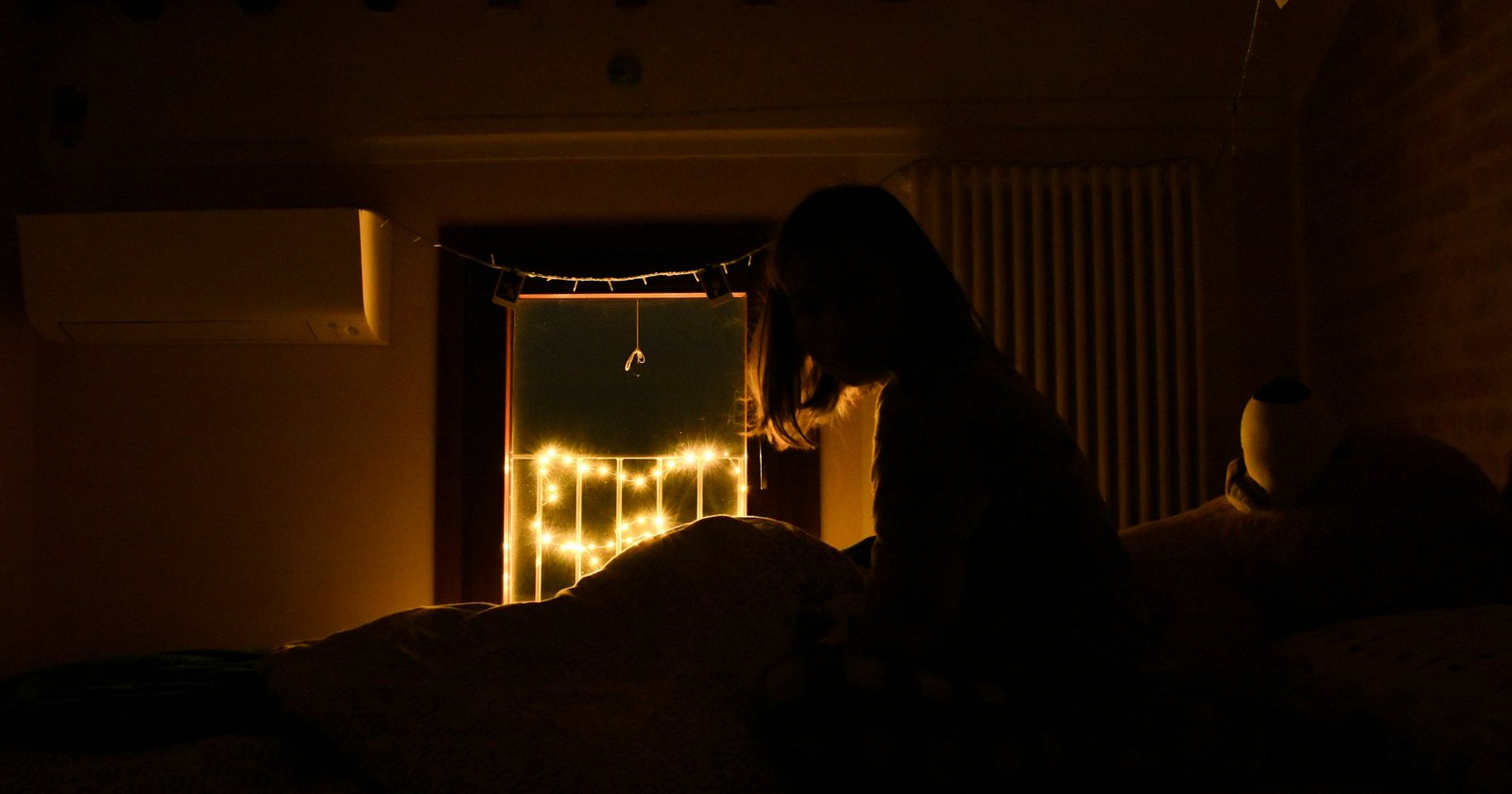
The short answer: waking up briefly during the night is perfectly normal. We all surface several times between sleep cycles, often without even remembering it. The real problem isn't waking up — it's not managing to fall back asleep and getting stuck, staring at the ceiling, watching the minutes tick by. And there's nothing magic about “3 a.m.”: it's simply the middle of the night, when your sleep gets lighter and the slightest awakening gets noticed.
The good news: in the vast majority of cases, it's not a serious disorder but a mix of identifiable — and changeable — factors.
Is it normal to wake up in the middle of the night?
Your sleep is organized in cycles of about 90 minutes. At the end of each cycle, you rise toward very light sleep — and sometimes you wake up for a few seconds before drifting off again. In the second half of the night, these light stages and REM sleep, the dreaming stage, dominate: you're easier to wake. A noise, needing to pee, a little stress is all it takes. In someone who sleeps well, these micro-awakenings go unnoticed. The trouble starts when your brain latches on and starts running.
This gets worse if you go to bed much earlier than usual, for example to “make up” for a bad night: you haven't built up enough sleep pressure, it runs out sooner, and you surface in the middle of the night with nothing left to put you straight back to sleep.
What causes waking up at 3 a.m.?
- Alcohol. Suspect No. 1 for 3 a.m. wake-ups. It puts you to sleep fast, then, as your body metabolizes it, it causes a rebound effect that wakes you in the second half of the night. A 2013 review covering all the studies in healthy volunteers confirms it: at every dose, alcohol speeds up sleep onset, then fragments the second half of the night — the drink-by-drink mechanism is here.
- Stress and cortisol. A heavy mental load keeps your nervous system on alert; your cortisol, which is supposed to rise toward the end of the night, can do so too early and too strongly. Stress doesn't just weigh on your mind — it also costs you physical recovery.
- Heat. A bedroom that's too warm or a comforter that's too thick hinders the drop in temperature deep sleep needs, and brings you back to the surface. According to a 2012 review on the thermal environment of sleep, heat increases awakenings and reduces both deep sleep and REM sleep.
- Blood sugar and dinner. A very late meal, sugary alcohol, or, on the contrary, going to bed on an empty stomach: swings in blood sugar can trigger an awakening.
- Age. Sleep naturally becomes lighter and more fragmented over the years. It's not a disease, it's a normal change.
- Habit. If you've been waking up at exactly the same time for weeks, sometimes your brain has simply gotten into the habit. Changing one anchor — bedtime, dinnertime — is often enough to unprogram it.
Why can't you fall back asleep? The anxiety loop
Here's the sneakiest trap. You wake up, you see “3:12,” and your brain kicks in: “I only have three hours left,” “I'm going to be wrecked tomorrow,” “why is this happening again.” That anxiety drives up alertness and cortisol — so it keeps you from doing exactly what you want to do: fall back asleep. The harder you push, the less it works. Sleep is like a bird perched on your hand: you can't grab it, you can only welcome it.
How to fall back asleep in the middle of the night
- Don't check the time. Turn your alarm clock around or cover it, and keep your phone far away. Knowing the time only fuels the anxious math: in two experiments published in 2007, watching a clock was enough to increase rumination and lengthen the time it took to fall asleep, even in good sleepers.
- Stay in the dark. No bright light, no screens: the slightest light tells your clock it's time to get up.
- If it goes past 20 minutes or so, get out of bed. Go to another room, keep the light low, do something boring and calm (reading, slow breathing), and come back when you feel sleepy again. This keeps your brain from associating your bed with insomnia. It's called “stimulus control,” one of the methods the American Academy of Sleep Medicine recommends for chronic insomnia.
- Breathe slowly. A long, slow breath, with the exhale longer than the inhale, brings your nervous system back down.
- Take the drama out of it. One isolated bad night won't wreck your day: your body makes up for an occasional shortfall very well. Telling yourself “it's no big deal” defuses the anxiety that, for its part, keeps you awake.
Longer term, most of these awakenings become less frequent when you take care of the basics: a cool bedroom, no alcohol in the evening, regular sleep times — the same levers that consolidate deep sleep. If nighttime awakenings persist for weeks and eat into your days, talk to a doctor: that's not overreacting, it's treating the right cause. Beyond three nights a week for three months, the 2023 European insomnia guideline calls it chronic insomnia — and its first-line treatment isn't a sleeping pill but cognitive behavioral therapy for insomnia (CBT-I).
Key takeaways
- Waking up between two cycles is normal; the problem is not falling back asleep.
- Common causes: alcohol, stress and cortisol, heat, blood sugar, age — almost all of them changeable.
- In the moment: don't check the time, stay in the dark, and get out of bed after 20 minutes.
Frequently asked questions
Why do I wake up at 3 a.m.?
In the second half of the night, your sleep gets lighter and the slightest awakening gets noticed. Common causes are alcohol, stress, heat and sleep anxiety — most often changeable.
How do you fall back asleep when you wake up at night?
Don't check the time, stay in the dark with no screens and breathe slowly. If you haven't fallen back asleep after 20 minutes or so, get up, do something calm in low light, and go back to bed when you feel sleepy again.
Is it bad to wake up during the night?
No, waking up briefly between cycles is normal. It becomes a problem if the awakenings are frequent, long and weigh on your days for weeks: in that case, talk to a doctor.
Sources
- Ebrahim IO, Shapiro CM, Williams AJ, Fenwick PB. Alcohol and sleep I: effects on normal sleep. Alcohol Clin Exp Res. 2013. doi:10.1111/acer.12006
- Okamoto-Mizuno K, Mizuno K. Effects of thermal environment on sleep and circadian rhythm. J Physiol Anthropol. 2012. doi:10.1186/1880-6805-31-14
- Tang NK, Schmidt DA, Harvey AG. Sleeping with the enemy: clock monitoring in the maintenance of insomnia. J Behav Ther Exp Psychiatry. 2007. doi:10.1016/j.jbtep.2005.07.004
- Edinger JD, Arnedt JT, Bertisch SM, et al. Behavioral and psychological treatments for chronic insomnia disorder in adults: an American Academy of Sleep Medicine clinical practice guideline. J Clin Sleep Med. 2021. doi:10.5664/jcsm.8986
- Riemann D, Espie CA, Altena E, et al. The European Insomnia Guideline: An update on the diagnosis and treatment of insomnia 2023. J Sleep Res. 2023. doi:10.1111/jsr.14035
What this article explains,
the app measures for you.
Ecleptic brings your sleep, nutrition and training together in one score, every morning. The iOS beta is open to a small circle.
Request access